




 Civita di Bagnoregio. / Photo: Giuseppe Quattrone.
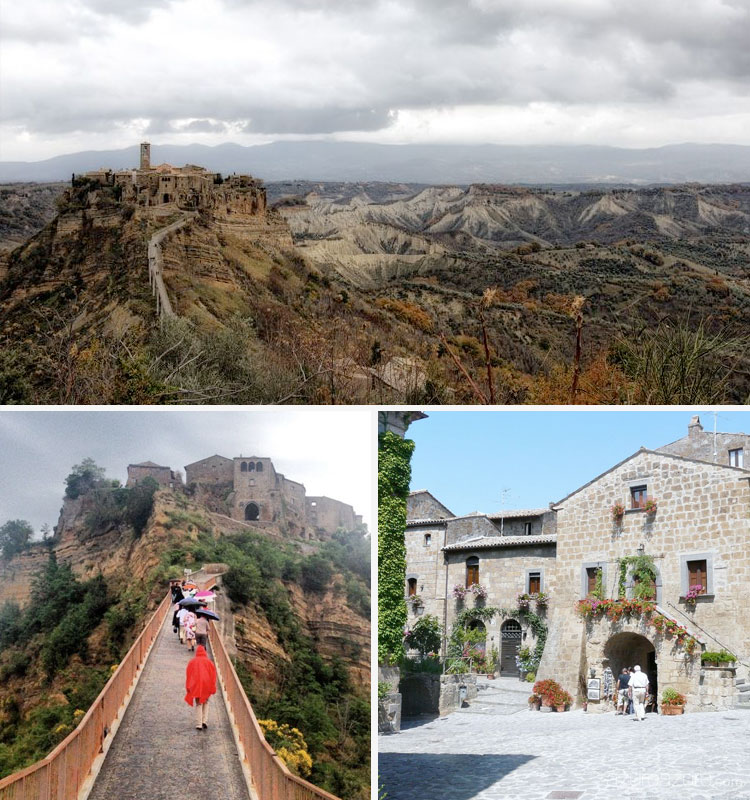 Civita di Bagnoregio.A single footbridge is the only access to the city, which is strategically located on top of a mountain (motorized vehicles are forbidden within city limits). The long walk to the top is immediately rewarded with impressive vistas of the valley below. The charming citadel is really a collection of medieval buildings crowned by a stunning bell tower. A stroll down its cobblestone streets is like traveling back to quieter times, for only ten residents call this place home, there are no cars, and hardly any trade. The Piazza del Duomo de San Nonato, with its original Etruscan columns, proudly displayed as the remains of a Pagan temple; the 12th century Romanesque church, where the past is honored; the communal palace, last surviving renaissance building, of which only the façade has been preserved; the Etruscan caves and the Roman city gate, all deserve a leisured visit.
 Corte de Ila Maesta Hotel. / Photos: Andrea Bressan & Anna Trentani.
The most exclusive hotel in town, Corte de Ila Maesta, with only five rooms and located in a majestic garden villa, offers private boat tours on lake Bolsena, horseback riding excursions, and panoramic helicopter flights over the vast canyon. Guests can take a day trip to the neighboring city of Orvieto and the church of San Pietro. A visit to Sacro Boso de Bomarzo or Park of the Monsters will also delight those seeking an otherworldly experience. In the 15th century, the Duke of Orsini commanded the construction of this monumental complex, adorned with detailed sculptures, many sculpted in the bedrock to respect the integrity of the original garden. The park has become the site of intimate literary pilgrimages, after Argentinian author Manuel Mujica Láinez was inspired by these gardens to write his novel Bomarzo (1962).
 Alma Civita Restaurant.
Civita’s culinary offerings are few but excellent: the enchanting Alma Civita restaurant is exquisitely managed by the Rocchi family; La Osteria al Forno di Agnese pays special attention to the town’s gastronomic history; and La Hostaria del Ponte, with its open, vine covered terrace and spectacular views of the city, all honor regional traditions. We found acquacotta, a peasant dish prepared with homemade bread and wild vegetables, and la zuppa di agnello, a kind of lamb stew in tomato and red wine base, to be among the most delightful specialties in the area. Nearby Montefiascone produces one of the most appreciated concoctions in all of Italy, the Est! Est! Est! a white wine with denomination of origin. Other wonderful artisanal products include extra virgin olive oil and pecorino cheese. ■
Related Articles:
A Bicycle Tour Takes Riders to the Heart of Italy’s Gastronomy
